

How To Do Push-Ups Effectively (5 Variations for Beginners)
I’ve signed up some new clients through my Clarity FM Pre-Call and this article is specifically geared towards them because some of them are new to doing push-ups.
And this motivated me to share this with you, because according to this study, push-ups improve heart health.
Not only does doing push-ups improve heart health, when you can do up to 40 push-ups, your chance of a heart attack go down substantially. This should open your eyes to how beneficial push-ups are. Performing as many push-ups as possible is a great way to gauge your fitness levels and track your progress.
It's the perfect way to get started with me if you want to get jacked but aren't quite ready to get my Alpha Body Blueprint program.
If you think that’s bullshit, click here, you’ll see that there is an association between push-ups and future cardiovascular problems go down, this is researched and clinically proven to decrease the chance of a heart attack!
So here’s my tip to you if you hate push-ups, get comfortable in the discomfort.
Because you now know how beneficial push-ups are for heart health.
So in this article, I am providing you with beginner variations only and I’m including common mistakes people make.
By the end of this article you will know how to do push-ups effectively. So let’s proceed…
What Are Push-Ups and Their Benefits?

Definition and Benefits of Push-Ups
Push-ups are a classic bodyweight exercise that work multiple muscle groups in one fell swoop. They are a staple in fitness routines for a reason—they provide functional benefits and are easy to modify for people of all fitness levels. When you do push-ups, you’re not just working your chest; you’re engaging your shoulders, triceps, and even your core and lower body muscles. This makes push-ups a fantastic exercise for building overall upper body strength and endurance.
The benefits of push-ups are numerous:
- Building Upper Body Strength: Push-ups target the chest, shoulders, and triceps, helping you build muscle and strength in these areas.
- Improving Core Stability: By engaging your core throughout the movement, push-ups help improve your core stability and strength.
- Enhancing Functional Fitness: Push-ups mimic the natural movement patterns of pushing, which can improve your functional fitness and mobility.
- Increasing Muscle Mass and Bone Density: Regularly performing push-ups can help increase muscle mass and bone density, which is crucial for overall health and fitness.
- Boosting Overall Fitness and Athletic Performance: Push-ups are a compound exercise that can enhance your overall fitness and athletic performance.
Incorporating push-ups into your routine can lead to significant improvements in your upper body strength and overall fitness. So, whether you’re a beginner or an advanced athlete, push-ups are a must-have in your workout arsenal.
Proper Push-Up Form
 NEVER DO DUCK PUSH-UPS OR ARC THE BACK
Standard Push-Up Technique
Getting the most out of your push-ups starts with mastering the proper form. Here’s a step-by-step guide to performing a standard push-up:
- Starting Position: Begin in a high plank position. Your hands should be shoulder-width apart, and your feet should be hip-width apart. Ensure your body forms a straight line from your head to your heels.
- Engage Your Core: Tighten your core muscles to maintain that straight line. This engagement is crucial for protecting your lower back and ensuring proper push-up form.
- Lower Your Body: Slowly lower your body toward the ground, keeping your elbows close to your body. Your elbows should bend at a 45-degree angle, not flaring out to the sides.
- Push Back Up: Press through your palms to push your body back up to the starting position. Squeeze your chest muscles at the top of the movement to maximize the benefits.
- Repeat: Continue for the desired number of repetitions, maintaining proper form throughout.
Remember, quality over quantity. It’s better to do fewer push-ups with perfect form than to do more with poor form. Proper push-up form not only maximizes the effectiveness of the exercise but also minimizes the risk of injury.
Push-Up Stands Increase Core and Upper Body Strength
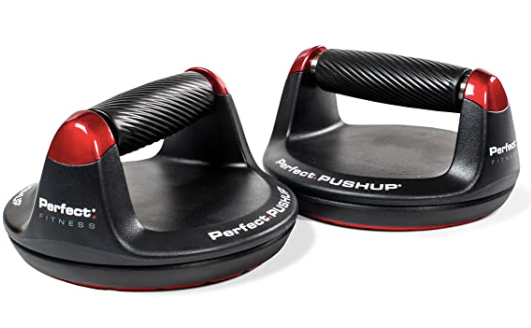
So here’s why I recommend push-up stands, it’s because this has helped me get good at push ups fast.
In fact, it can be used for all fitness levels, beginner, intermediate, and advanced.
It’s going to last you for a very long time and there are tutorial videos on how to use it on Amazon.
Not only does it increase core strength, but also you can deepen range of motion when you get better and better.
Push-ups are a classic bodyweight exercise that work multiple muscle groups in one fell swoop. Body weight significantly affects the difficulty and effectiveness of push-ups, as heavier individuals may find them more challenging, while lighter individuals might perform more repetitions with ease.
I recommend doing push-ups every day if you want strong arms and good upper body strength, and use these push-up stands.
Why I Always Incorporate This Body Weight Exercise

Every time I work with my clients, I incorporate body weight training for finishers and push-ups is one of the ways to seriously finish your chest off after doing chest day for example. Body weight significantly affects the difficulty of push-ups, making them more challenging for some and easier for others, which is why modifying techniques to accommodate different levels of body weight is crucial for effective strength training.
I love doing push-ups with my clients because it’s a scalable exercise. When you get good, you can progress and do clapper push-ups, you can even incorporate some medicine balls.
I’ll show you some advanced push-ups in a different article. Just understand that you can put this exercise in a conditioning workout and crank them out till failure regardless if it’s clapper’s or standard push-ups.
And it’s such a fun exercise. When you get good at push-ups, nothing is more satisfying then seeing a client achieve their goals.
There are some people that find this exercise really hard and doubt themselves, so I’m going to address one last thing…
Don’t Tell Yourself You Can’t Do It
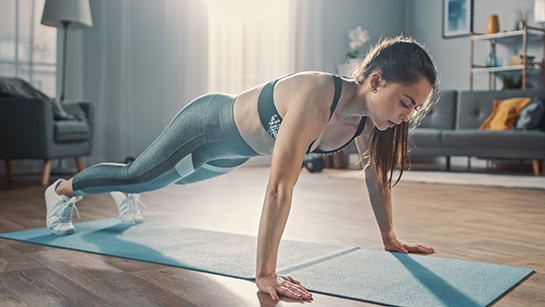
I have to address this because I’ve seen so many people do this as a group fitness instructor.
The most sad thing I see is people doubting what they think they can do.
You’d be surprised what the human body is capable of.
In fact, the number one thing holding yourself back in fitness is your own negative self-talk.
So cut the shit man. Don’t say, “I can’t do push-ups. I don’t know how to do push-ups.” Assess your ability by seeing how many push-ups you can perform in a row with proper form.
Don’t ever say that. Why?
- I am going to teach you how to do push-ups.
- I am going to encourage you to step outside of your comfort zone.
- You must stop buying in to negative belief systems, they do nothing to help you progress, if anything, it stops you.
And I want you to follow your fears. Because no growth happens in your comfort zone. It happens in the courage zone.
Core Engagement is Key to Preventing Injury
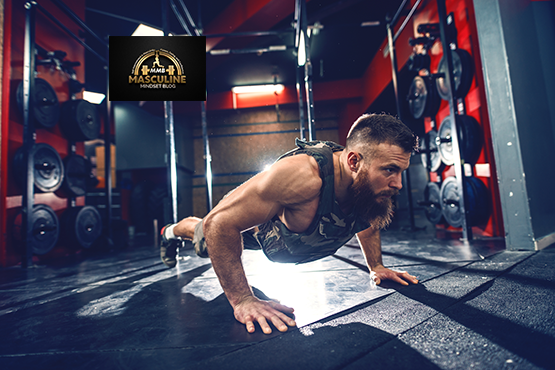
You are going to realize that when you get good at push-ups, it’s going to be a consistent exercise that you’ll perform when you work chest.
The more you perform push-ups, the better that you are going to get. And even if it gets old, I’m giving you five variations.
You can intensify push-ups when you get good. However, this particular article is for beginners.
So let’s talk about a few things before I show you the moves.
Firstly, don’t aim the butt high, this is a common mistake. Secondly, don’t ever have the pelvis too close to the floor.
The most important point to doing push-ups that REALLY count is to engage your core (the deepest muscle in your core.)
Proper form during the push up movement is crucial to ensure body alignment and prevent injury.
I am talking about your transverse abdominus. I strongly recommend you read this to understand what I mean.
This is why it’s one of the most effective bodyweight exercises.
If you think about it, you work the entire upper body, chest, core, and shoulders.
Tips for Choosing the Right Push-Up Variation

Assess Your Fitness Level and Goals
With so many push-up variations available, it can be overwhelming to choose the right one for your fitness level and goals. Here are some tips to help you make the best choice:
- Assess Your Fitness Level: If you’re a beginner, start with a modified push-up variation such as knee push-ups or incline push-ups. These variations reduce the intensity and help you build strength gradually. If you’re more advanced, challenge yourself with decline push-ups or diamond push-ups.
- Determine Your Goals: Your fitness goals will guide your choice of push-up variations. If you aim to build upper body strength, stick with standard push-ups or variations that target the chest and shoulders. For improving core stability, try plank push-ups or other core-engaging variations.
- Consider Your Body Type: Your body type can influence which push-up variations are most comfortable and effective for you. For example, if you have long arms or a larger body type, you might prefer push-up variations that reduce the range of motion, such as push-ups with a shorter range of motion.
- Experiment with Different Variations: Don’t be afraid to try out different push-up variations to see what works best for you. Mixing up your routine can keep your workouts interesting and help you achieve a well-rounded fitness level.
Here are some popular push-up variations to consider:
- Incline Push-Up: This variation reduces the range of motion and makes the exercise easier, perfect for beginners.
- Decline Push-Up: This variation increases the range of motion and makes the exercise more challenging, ideal for advanced exercisers.
- Diamond Push-Up: This variation targets the triceps and chest muscles, providing a different challenge for your upper body.
- Plank Push-Up: This variation engages the core and improves core stability, making it a great addition to your routine.
- Eccentric Push-Ups: Focus on the lowering phase of the exercise to improve muscle strength and endurance.
By choosing the right push-up variation for your fitness level and goals, you can maximize the benefits of this versatile exercise and keep your workouts fresh and challenging.
Wall Push-Ups

This is an exercise that I recommend to my clients that cannot get to the floor.
When I trained special populations in the gym Anytime Fitness, I had a handful of people come through that said, “I had surgery done, I cannot do push-ups on my knees.”
So when I trained class and I had push-ups on the board, I walked over and said, “Do wall push-ups.”
Then I would correct them when they had their hands too high. So here’s my suggestion to you if you can’t go to the floor.
Do wall push-ups. Time yourself for one minute and do as many as you can within the sixty seconds. Try to perform as many push-ups as possible within this timeframe to gauge your fitness level and ensure proper form.
With that said, I know that a lot of you are thinking, “I would NEVER do this in a million years, it’s not much work.”
Imagine you have surgery on both of your knees. And it hurts to put your knees on the floor to modify push-ups.
This is what happened when I trained evening classes, they told me, “I cannot modify on my knees.”
One major tip on doing wall push-ups, I want you to look at my stance above. Notice that my feet are farther away from the wall.
Why does that make it harder? Because when you’re too close to the wall, it’s hardly no work to do the exercise.
So for those of you that cannot go on your knees, this is the exercise that I would diagnose for you to do.
And a great way to make it more challenging is for you to hold at the very bottom, make it isometric. This burns!!
Another way to challenge yourself is to pulse the motion very short movements in the middle point of the push-up.
You’ll feel it, trust me on this one.
Time yourself to do this exercise for one minute, see how many you can do.
Knee Push-Ups (Modified)

Go on your knees my friend, this is how I started in my fitness journey about fifteen years ago. I could barely do regular push-ups. In a standard push-up position, your hands should be placed shoulder-width apart and your feet together, forming a straight line from your head to your heels.
This is how I started and this is what I recommend to most clients because I ALWAYS see them tilt the pelvis way too low.
The minute I see that, I say to them, “Stop it right now. I don’t want you hurting yourself cause you’re moving your pelvis wrong. So stop the exercise before you hurt yourself.”
By the way, when I say that, I mean it with love, don’t take it personal my friend.
If you’re guilty of aiming your pelvis too low, you’ll fuck up your lower back.
I mean that. So if you ever catch yourself doing this and it hurts, now you know.
These tips I have to tell you because so many people do push-ups WRONG.
And it’s because you fatigue your arms and chest, you start cheating.
Now as I previously said for the Wall Push-Ups, time yourself for 60 seconds.
Standard Push-Ups (Touch the Floor!)

Touch the floor with your core on every repetition. To achieve the perfect push-up, ensure your body is aligned correctly according to the five kinetic chain checkpoints, whether you perform it with hands elevated or from the floor.
Now I understand if you have to start modifying on your knees, especially since I’m challenging you to touch the floor.
So here’s what I suggest, tilt and tuck the pelvis, touch the floor with your core. This is a very subtle fix that works!
I challenge you to do this exercise if you think you’ve mastered push-ups with just this subtle fix and do it for a full minute.
And here’s how I recommend you get through this move through the full minute, take Bucked Up and you’ll feel primed and ready to do this challenge to do quality repetitions for one minute!
Wide Hand Push-Ups

I have to say this again and again, but do not sag the hips down or upward!
In the wide push-up, you are hitting more of the anterior (front shoulder) and it has a strong chest focus. This exercise engages upper body muscles like the deltoids, pectorals, triceps, and biceps, enhancing strength and functional fitness.
Keep your neck neutral, this is a very subtle fix, however, I’ve seen people make the mistake of leaning their head to the floor.
That means just keep your head still. You can actually have neck pain if you lean too far forward.
If you are doing all five exercises for one minute each (which I STRONGLY encourage you to do) go on your knees.
Why? Well by this point, I’m sure your arms are toast from the previous push-ups.
You can do knee wide hand push-ups, there is no shame in modifying.
See this is what I encounter in some of my clients..
“But Adam, I feel like I’m not working out if I’m modifying.”
BRO, IF YOU HAVE BAD FORM, DON’T RISK INJURY!
Don’t beat yourself up for modifying.
Military Push-Ups

Look at my elbows, notice how they aren’t facing outward, they are close to my lats (back muscle).
That’s a very subtle but significant difference between standard and military push-ups.
It’s more about your triceps my friend. You will burn them out.
If you have to go on your knees, I totally get it.
You see, I’ve been doing push-ups for up to fifteen years, this is not that hard for me.
So again, I’ll say this one more time go on your knees!
There are a few instructions I want to give you for military push-ups:
- Keep the elbows tucked in towards your lats
- You should be focusing on your triceps (if you are feeling it anywhere else, you are doing it wrong)
- The hands must be under the shoulders
The Bottom Line: How To Do Push-Ups
@masculinemindsetcoach Check out this badass crushing push-ups! #pushups #medicineballworkout #medicineball ♬ original sound – Adam Skoda
I really want you to do this bodyweight routine in the following order:
- Wall Push-Ups Hold for 60 Seconds
- Knee Push-Ups for 60 Seconds
- Standard Push-Ups for 60 Seconds
- Wide Hand Push-Ups for 60 Seconds
- Military Push-Ups for 60 Seconds
Many people have told me, how do I build strength without dumbbells and barbells?
Just do this workout. You’ll feel it if you don’t take a rest in any of the exercises.
Use a timer on your phone, there are no excuses because success loves speed.
You can start incorporating medicine balls. This is technically Mobility Training when involving any type of imbalance. I showed Gabe how to do push-ups.
So don’t waste my time if you’re on the fence. Consult with me here if you’re 100% committed to improving your health.
